POSTERIOR · MLB RESEARCH

Baseball betting · An MLB guide

Baseball betting,
with the evidence attached.

Start with the price, understand the market, then check the record. Learn how MLB odds work, explore model-based picks and player props, and inspect the results behind the predictions.

Understand

The market

Moneyline, run line, totals, and player props ask different questions about the same game.

Compare

The price

A likely outcome can still be a poor price. Probability and payout belong together.

Verify

The record

Check dated results, sample sizes, losses, and voids—not just a winning percentage.

01 / Intent

01 / Markets

How baseball betting works

A moneyline bet concerns which team wins. A run line adds a handicap, commonly 1.5 runs. A total concerns both teams' combined runs. Player props concern an individual outcome, such as a pitcher's strikeouts or a batter's total bases. First-five-innings markets cover only part of a game.

These are different contracts, not interchangeable predictions. Read the market, line, and settlement terms. This guide focuses on MLB; a market described here is not a promise that Posterior publishes a pick for it today.
02 / Odds

Read the price before the pick

In a hypothetical example, +150 pays $150 profit on a $100 winning stake; -150 requires a $150 stake for $100 profit. Returned stake is separate from profit. Those prices imply break-even win rates of 40% and 60%, respectively, before considering fees or other costs.

The two sides of a sportsbook market usually add to more than 100% implied probability because of the margin. A model's estimate is uncertain, and a favorite is not automatically a good bet. See how Posterior compares estimates with prices in the MLB betting model methodology.

03 / Today's board

MLB picks today

Start with the daily MLB picks page for available public board context and the published record. The homepage shows the public pick when one is available. The full current board follows the access described on Pricing.

A pick belongs to a particular line, price, and timestamp. A later price is a new decision, not the original recommendation. Some slates have no qualified opportunity; waiting or passing is a valid outcome. Never read an old result as a current pick.

04 / Props

Player props need probabilities

A projected average and the chance of clearing a line are different measurements. Two pitchers can share an average strikeout projection while having different chances of reaching seven. Workload uncertainty matters as well as the central estimate.

Explore the MLB player prop model for market-specific methods and public results, or the strikeout props lab for pitcher context. Compare the probability at the actual line with the offered price.

05 / Proof

Evaluate a baseball betting model

Look for predictions recorded before the outcome, the price available at the time, and a complete result history. Win rate alone does not establish profitability: the prices, stakes, losses, voids, and sample size all affect the interpretation. Keep backtests separate from live published results.

Inspect Posterior's public track record and delayed pick ledger. Calibration measures whether stated probabilities agree with outcomes across enough observations. Past results do not guarantee future returns.

06 / Follow-through

Track prices and settlement

Closing-line value compares a recorded price with a later closing reference for the same market. It is a diagnostic about price capture, not proof that one pick will win or a model will remain profitable.

A scratched starting pitcher or postponed game can change settlement. Check your operator's terms. Posterior's grading policy describes its own record; it does not replace a sportsbook's rules.

02 / How it works

  1. Step 01

    Name the outcome

    Identify the game, player, market, line, and period. A full-game total and a first-five total are different events.

  2. Step 02

    Understand the estimate

    Check what the model estimates, which information was available, and what uncertainty or missing context could change it.

  3. Step 03

    Keep the original receipt

    Record the available price and timestamp. Judge the original decision using what was known then, rather than rewriting it after the result.

  4. Step 04

    Review a complete sample

    Review losses as well as wins, and use a clearly dated sample. Short streaks and tiny samples cannot establish a durable advantage.

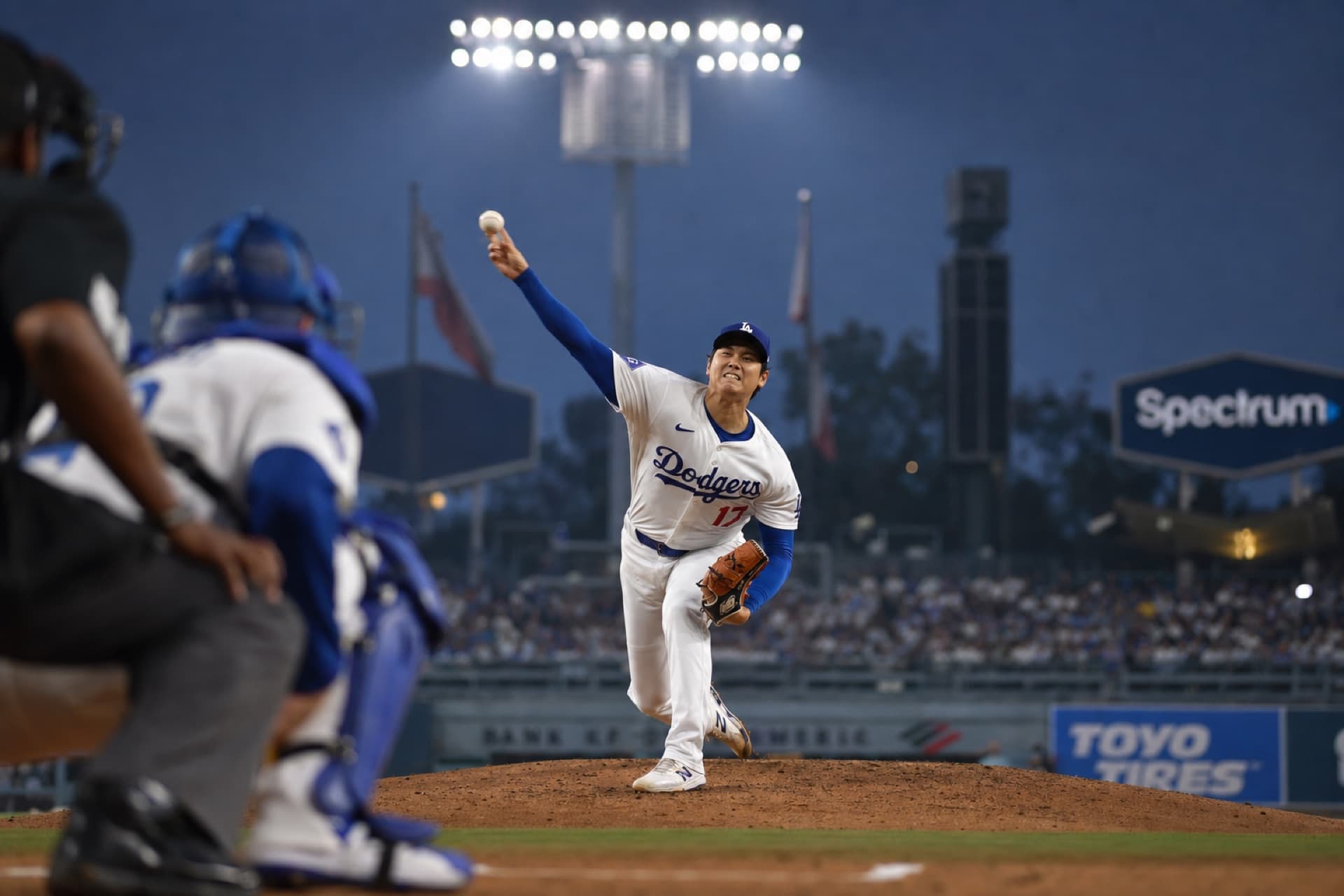
Shohei Ohtani delivering a pitch

Public proof

A prediction is an estimate. A record is evidence.

Read the price, the date window, the sample size, and the losses before judging a betting model.

03 / Questions

Is Posterior a sportsbook?

No. Posterior is an MLB research and decision product. It provides model context and a public performance record; it does not accept wagers.

Where can I see free MLB picks and results?

The homepage shows a public pick when one is available. The MLB picks page provides public board context, and the accuracy page and delayed data ledger expose settled results. The full current board follows the published subscription access. No pick is promised for every day or every game.

Does a high win rate mean a profitable betting model?

No. The prices paid and the stakes determine returns. Evaluate win rate alongside the recorded odds, returns, sample size, date window, calibration, and complete losses and voids.

What should I check before following a baseball prediction?

Check the market and line, the price and timestamp, the model's uncertainty, and its dated public record. A different price can change the decision. Predictions are estimates, not guarantees.

Posterior is baseball data, not a sportsbook. The public receipt lives at /data, the methodology lives at /methodology, and today's board starts at /today.